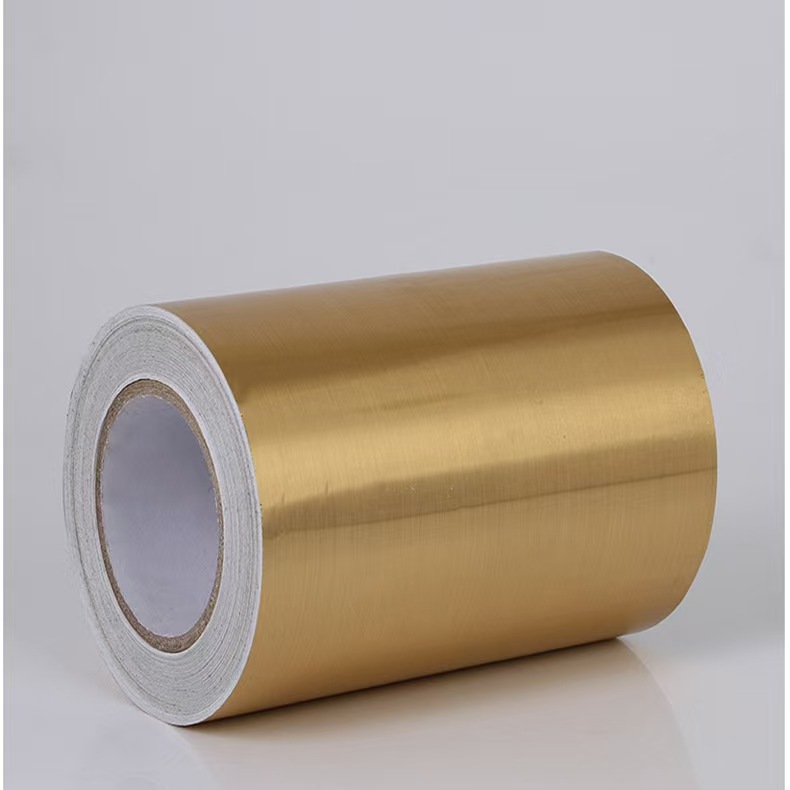
Gas Phase vs Condensed Phase Flame Retardants for PET Films
Polyethylene terephthalate (PET) films have become indispensable in various industries, ranging from electronics to packaging and construction. However, their inherent flammability demands careful consideration of flame retardant strategies. Among the many PET flame retardant types, gas-phase and condensed-phase systems represent two distinct yet sometimes complementary approaches. This article compares these mechanisms, highlighting their effectiveness, typical applications, and role in developing phosphorus flame retardant PET materials.
1. The Need for Flame Retardant PET Films
PET films are prized for their high tensile strength, dimensional stability, and chemical resistance. Yet their combustibility poses risks in electrical insulation, battery films, and construction barriers. Developing effective PET flame retardant types is essential to meet safety standards such as UL 94, FMVSS, and EN 13501.
Flame retardants work by interrupting the combustion cycle, which involves fuel generation, ignition, and flame propagation. Two broad strategies exist: interference in the gas phase and protection in the condensed (solid) phase.
2. Gas Phase Flame Retardants: Mechanism and Features
Gas-phase flame retardants inhibit combustion by targeting the flame chemistry itself. When PET decomposes, it releases flammable volatiles. Gas-phase additives suppress the fire by reacting with high-energy radicals (like H· and OH·) that sustain combustion.
Mechanism:
- Flame retardants decompose to form inert gases or radical scavengers.
- These agents neutralize flame-sustaining radicals in the gas phase.
- This reduces flame temperature and slows combustion.
Typical Additives:
- Halogenated compounds (e.g., brominated flame retardants – restricted due to toxicity)
- Phosphorus-based additives (e.g., organophosphates, DOPO derivatives)
Benefits:
- Efficient at low loadings
- Minimal impact on PET’s mechanical properties
- Good for thin-film and coating applications
Drawbacks:
- May generate toxic gases (halogenated types)
- Short duration of protection once gases dissipate
In phosphorus flame retardant PET, phosphorus acts both in gas and condensed phases, making it versatile for multiple flame retardant roles.
3. Condensed Phase Flame Retardants: Mechanism and Features
Condensed-phase flame retardants work by creating a barrier on the PET surface, preventing oxygen and heat from accessing the base polymer.
Mechanism:
- Upon heating, the flame retardant promotes char formation.
- This char insulates the polymer and limits gas release.
- It also reduces heat and mass transfer to the flame.
Typical Additives:
- Ammonium polyphosphate (APP)
- Melamine polyphosphate (MPP)
- Expandable graphite
- Nanoclays (e.g., montmorillonite)
Benefits:
- Forms long-lasting protection
- Improves thermal stability
- Reduces smoke production
Drawbacks:
- May affect PET transparency or flexibility
- Requires higher additive loadings
Phosphorus flame retardant PET benefits here too—phosphorus-based systems like APP promote strong, stable char layers in the condensed phase.
4. Dual-Action Systems: Combining Gas and Condensed Phase Mechanisms
Modern PET flame retardant types often combine both mechanisms to maximize protection:
- Phosphorus-nitrogen intumescent systems form foamed char layers and release inert gases.
- Nanoadditives enhance barrier effects and char cohesion.
- DOPO derivatives function in both flame radical quenching and char formation.
These hybrid solutions enable phosphorus flame retardant PET to achieve UL 94 V-0 ratings, high limiting oxygen index (LOI), and low smoke emissions.
5. Applications and Material Considerations
Gas-phase flame retardants are common in:
- Thin PET films for electronics
- Spray coatings
- Flexible circuit insulation
Condensed-phase systems are preferred for:
- Thicker films and sheets
- Battery insulation wraps
- Automotive and construction barriers
Material engineers must weigh trade-offs between transparency, flexibility, processability, and environmental compliance when selecting PET flame retardant types.
6. Regulatory and Environmental Considerations
Gas-phase halogenated retardants face restrictions under RoHS, REACH, and WEEE due to toxicity and environmental impact. Consequently, phosphorus flame retardant PET solutions are favored for their halogen-free, low-smoke performance.
Conclusion
Both gas-phase and condensed-phase flame retardants play critical roles in enhancing fire safety of PET films. Gas-phase systems work through radical scavenging in flames, while condensed-phase systems form protective char layers. Phosphorus flame retardant PET combines the strengths of both, offering comprehensive fire resistance in modern applications. Understanding the distinctions between PET flame retardant types is essential for material designers aiming to meet performance, safety, and sustainability goals.
SEO关键词(40组)
PET flame retardant types, phosphorus flame retardant PET, gas-phase PET flame retardants, condensed-phase PET protection, DOPO PET additives, intumescent flame retardants PET, PET film UL 94, halogen-free flame retardants PET, PET with APP and MPP, PET insulation film, PET cable coatings, PET for battery wraps, PET in electronics fire safety, PET char-forming systems, PET nanoclay flame protection, PET fire suppression additives, PET non-halogen fire solution, PET for low smoke applications, PET in automotive insulation, PET hybrid flame retardants, PET fire barrier performance, PET for thermal shielding, PET smoke emission control, PET film safety innovation, PET flame resistance testing, PET environmental fire retardants, PET smart flame systems, fire retardant PET sheets, PET flexible flame protection, PET fire testing standards, PET phosphorous gas inhibitors, sustainable PET flame additives, PET LOI improvement, PET high-temperature barrier, PET thermal runaway suppression, PET in green construction, PET fire-safe composites, phosphorus PET fire mechanisms
READ MORE:
- Comparative Analysis of Gas and Condensed Phase Flame Retardants in PET Films
- Evaluating Phosphorus-Based Flame Retardant PET: Gas and Condensed Phase Benefits
- Synergistic Use of Gas and Condensed Phase Flame Retardants in PET Films
- Understanding PET Flame Retardant Types: Gas vs Condensed Phase Mechanisms
Telephone: 008613530419893
E-mail:marie@selfadhesivefilm.com
ADDRESS (Shenzhen):903-286, Building A2, Guangming Technology Park, China Merchants Group, Guanguang Road, Fenghuang Community, Fenghuang Street, Guangming District, Shenzhen, Guangdong.
ADDRESS (Dongguan): 3rd Building No.45 Yinhu Road Shishuikou Community,Qiaotou Town, Dongguan, Guangdong.


